
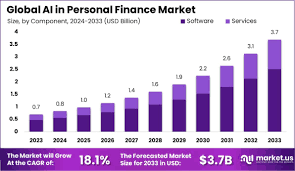
In 2026, artificial intelligence (AI) is no longer a futuristic concept limited to tech companies and research labs. It has become a practical, everyday tool that is transforming how individuals manage their money. From budgeting apps to investment platforms, AI is reshaping personal finance in powerful and meaningful ways. Whether someone is a student managing pocket money, a salaried employee planning monthly expenses, or an entrepreneur growing wealth, AI-driven tools are now playing a major role in financial decision-making.
Companies like Google, Apple, and Microsoft have integrated AI into their ecosystems, influencing financial apps and services globally. At the same time, fintech companies such as PayPal and Robinhood are leveraging AI to improve user experience and financial accessibility.
This article explores how AI is changing personal finance management in 2026 and what it means for the future.
1. Smart Budgeting and Expense Tracking
One of the most noticeable changes AI has brought to personal finance is intelligent budgeting. Traditional budgeting required manual entry of expenses and income. People had to categorize spending themselves, which was time-consuming and often inaccurate.
In 2026, AI-powered apps automatically track transactions in real time. These systems connect to bank accounts and classify spending into categories such as groceries, rent, entertainment, and utilities. The AI learns from user behavior. For example, if someone frequently shops at a specific store, the system recognizes patterns and categorizes expenses accurately without user input.
More importantly, AI does not just track expenses — it analyzes them. It identifies unnecessary spending, predicts future bills, and sends smart alerts before overspending happens. Instead of reacting to financial problems, users can now prevent them.
2. Personalized Financial Advice
In the past, personalized financial advice was mostly available to wealthy individuals who could afford financial advisors. In 2026, AI has democratized financial guidance.
AI-powered financial assistants act like virtual advisors. They analyze income, spending habits, debts, savings goals, and risk tolerance to provide customized recommendations. For example, the system may suggest:
- Increasing monthly savings by 10%
- Switching to a lower-interest credit card
- Investing in diversified assets
- Reducing discretionary spending
Unlike traditional advisors, AI tools are available 24/7 and cost significantly less. They continuously update advice based on changes in income or market conditions.
3. AI in Investing and Wealth Management
Investing used to require deep knowledge of stock markets and financial instruments. In 2026, AI has made investing more accessible and less intimidating.
Robo-advisors powered by AI create and manage portfolios automatically. These systems analyze market data, economic indicators, and global trends within seconds. They rebalance portfolios when needed and optimize asset allocation according to the user’s goals.
Platforms like Robinhood use AI to provide insights into market movements, risk analysis, and personalized investment suggestions. Instead of relying on emotions or rumors, investors can now depend on data-driven strategies.
AI also helps reduce behavioral biases. Many investors panic during market drops or become overconfident during bull markets. AI systems remain objective and stick to long-term strategies, improving overall financial outcomes.
4. Fraud Detection and Security Enhancement
Security is a major concern in digital finance. As online transactions increase, so do fraud attempts. AI plays a critical role in protecting users from financial crimes.
AI algorithms monitor transaction patterns and detect unusual activities instantly. For example, if a person who usually shops in Pakistan suddenly makes a purchase in another country, the system flags it immediately. The transaction may be temporarily blocked until verification.
Companies like PayPal use advanced machine learning models to analyze millions of transactions per second. This significantly reduces fraud risks and protects customer funds.
Biometric authentication, such as facial recognition and fingerprint scanning, is also powered by AI. These technologies add an extra layer of security, making digital finance safer than ever before.
5. Voice and Chat-Based Financial Assistants
In 2026, managing money can be as simple as having a conversation. AI-powered voice assistants and chatbots allow users to check balances, transfer funds, and pay bills through simple commands.
For example, through devices integrated with Apple or Google ecosystems, users can say:
- “How much did I spend this week?”
- “Transfer 5,000 rupees to savings.”
- “When is my electricity bill due?”
The AI responds instantly with accurate information. This conversational interface makes financial management easier for elderly users and people who are not tech-savvy.
6. Credit Scoring and Loan Approvals
AI has also transformed how creditworthiness is evaluated. Traditional credit scoring relied on limited data, such as repayment history and outstanding debt. This often excluded individuals without formal banking records.
In 2026, AI considers alternative data sources such as utility payments, digital transactions, and even spending behavior. This provides a more accurate and inclusive assessment of financial reliability.
Loan approval processes have become faster. Instead of waiting days or weeks, AI systems evaluate risk within minutes. This speeds up access to credit for small business owners and individuals who need urgent funds.
7. Financial Planning for Long-Term Goals
AI is not only useful for daily budgeting but also for long-term financial planning. Whether someone is saving for higher education, buying a home, or planning retirement, AI tools create realistic roadmaps.
These systems simulate different scenarios. For example:
- What happens if income increases by 20%?
- What if inflation rises?
- What if an emergency expense occurs?
By analyzing thousands of possibilities, AI helps users prepare for uncertainty. This predictive capability reduces financial stress and builds confidence.
8. Behavioral Insights and Financial Discipline
One of the most powerful aspects of AI in 2026 is its ability to understand human behavior. Financial decisions are often emotional rather than rational. AI analyzes patterns and identifies habits that harm financial health.
For example, it might notice that a user spends more during weekends or online sales. The system can send reminders like:
“You spent 30% more than usual this weekend. Consider reviewing your budget.”
These gentle nudges improve financial discipline without being intrusive.
9. Automation of Savings and Bill Payments
AI-powered automation ensures that savings and bills are handled without manual effort. Smart systems automatically transfer money into savings accounts based on spending patterns. If income fluctuates, the AI adjusts savings amounts accordingly.
Automatic bill payments reduce the risk of late fees. The system ensures sufficient balance before payments and alerts users if funds are low.
This automation reduces stress and ensures financial consistency.
10. Challenges and Concerns
While AI offers many advantages, it also raises concerns. Data privacy is a major issue. Financial apps collect sensitive information, and any data breach can cause serious damage.
There is also the risk of over-reliance on AI. Users may stop learning basic financial skills, depending entirely on algorithms.
Additionally, AI systems are only as good as their programming. Bias in data can lead to unfair credit decisions or investment suggestions.
Therefore, while AI is powerful, it should complement human judgment, not replace it entirely.
Conclusion
In 2026, AI has become a revolutionary force in personal finance management. From smart budgeting and personalized advice to fraud detection and automated investing, artificial intelligence has made financial management more efficient, accessible, and secure.
Major technology companies like Microsoft and fintech platforms are continuously improving AI capabilities, making financial tools smarter every year.
For individuals, this transformation means greater control over money, better decision-making, and improved financial stability. However, responsible usage and awareness of risks remain important.
As AI continues to evolve, personal finance will become even more intelligent, predictive, and personalized. The future of money management is not just digital — it is intelligent.