
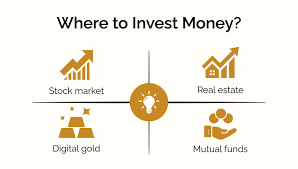
Investing is one of the most effective ways to grow wealth over time. While saving money is important for short-term security, investing allows your money to work for you, taking advantage of compound growth and long-term returns. For beginners, the right investment choices can create a solid foundation for financial growth.
Why Investing Matters
Investing helps:
- Grow your wealth faster than traditional savings
- Protect against inflation
- Generate passive income
- Achieve long-term financial goals such as retirement or buying a home
Even small, consistent investments can grow significantly over time if started early.
1. Stocks
Stocks represent ownership in a company. When the company grows and earns profits, stock prices usually rise, and some companies pay dividends.
Pros:
- High growth potential
- Dividend income
- Liquidity (easy to buy and sell)
Cons:
- Market volatility can cause short-term losses
- Requires research and understanding of companies
For beginners, investing in individual stocks can be rewarding, but starting with well-known companies or blue-chip stocks reduces risk.
2. Exchange-Traded Funds (ETFs)
ETFs are collections of stocks or bonds bundled together, traded on stock exchanges. They allow investors to diversify easily.
Pros:
- Diversification reduces risk
- Lower fees compared to mutual funds
- Traded like stocks for easy access
Cons:
- Market risk still exists
- Limited control over individual investments
ETFs are ideal for beginners seeking diversification without complex research.
3. Mutual Funds
Mutual funds pool money from multiple investors to invest in stocks, bonds, or other assets. Fund managers handle investment decisions.
Pros:
- Professional management
- Diversification
- Suitable for long-term goals
Cons:
- Fees and management costs
- Returns vary based on fund performance
Mutual funds are beginner-friendly and can be used for retirement or education savings.
4. Bonds
Bonds are loans you give to governments or companies in exchange for fixed interest payments over time.
Pros:
- Safer than stocks
- Predictable income
- Lower volatility
Cons:
- Lower returns than stocks
- Inflation may reduce purchasing power
Bonds are ideal for balancing risk in an investment portfolio.
5. Real Estate
Investing in property can generate rental income and long-term appreciation. Real estate can be physical property or REITs (Real Estate Investment Trusts).
Pros:
- Potential for passive income
- Appreciation over time
- Tax advantages in some regions
Cons:
- High initial capital required
- Maintenance costs and management responsibilities
Real estate is a long-term investment that diversifies your portfolio.
6. Retirement Accounts
Retirement accounts like 401(k)s, IRAs, or their equivalents offer tax advantages and long-term growth. Contributions often reduce taxable income, and investments grow tax-deferred or tax-free.
Pros:
- Tax benefits
- Long-term growth
- Compound interest over decades
Cons:
- Early withdrawals may incur penalties
- Limited access to funds
Retirement accounts are crucial for long-term financial security.
7. Digital Assets and Alternative Investments
Modern investors may explore digital assets such as cryptocurrencies or commodities like gold. While riskier, they offer diversification.
Pros:
- High growth potential
- Portfolio diversification
- Accessible to beginners online
Cons:
- Highly volatile
- Requires careful research and risk management
Alternative investments should only make up a small portion of a beginner’s portfolio.
Tips for Beginner Investors
- Start early to take advantage of compounding
- Diversify across asset types to reduce risk
- Invest consistently, even small amounts
- Avoid trying to time the market
- Educate yourself before making decisions
Final Thoughts
Investing is not about quick gains; it is about steady growth and long-term planning. For beginners, focusing on diversified, low-cost, and manageable investments is the key to building wealth.
By starting early, staying consistent, and learning gradually, anyone can use investing to secure financial stability, achieve goals, and eventually reach financial freedom.