
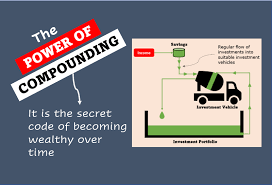
Compound interest is often called one of the most powerful concepts in finance and wealth building. It allows money to grow faster over time by earning returns not only on the original investment but also on the profits already earned. Understanding how compound interest works can completely change the way you think about saving and investing.
Many people underestimate its impact because the growth starts slowly. However, over long periods, compound interest can transform small amounts of money into significant wealth.
What Is Compound Interest?
Compound interest means earning interest on both your initial money (principal) and the interest that accumulates over time. Unlike simple interest, which is calculated only on the original amount, compound interest continuously increases the total value of your investment.
For example, if you invest money and earn returns each year, the next year’s returns are calculated on a larger amount. This cycle repeats, causing exponential growth.
Why Compound Interest Is So Powerful
The true strength of compound interest comes from time. The longer money remains invested, the faster it grows. In the early years, growth may seem small, but later years produce much larger increases because earnings keep building on previous gains.
This is why starting early is more important than investing large amounts later in life.
Time vs Amount: Which Matters More?
Many beginners believe they need a large investment to build wealth. In reality, time has a greater impact than investment size.
Someone who starts investing small amounts at a young age often ends up with more wealth than someone who invests large sums but starts late. Early investing gives compound interest more time to work.
The Role of Consistency
Compound interest works best when investments are made regularly. Monthly or yearly contributions increase the base amount that generates returns.
Consistent investing also reduces the pressure of trying to time markets perfectly. Instead of waiting for the perfect moment, steady contributions allow growth to happen naturally.
Compound Interest and Long-Term Investing
Long-term investing is closely connected with compounding. Frequent buying and selling can interrupt growth, while staying invested allows returns to accumulate.
Patience is essential. Investors who remain consistent through market ups and downs benefit the most from compounding over decades.
Reinvesting Earnings
One of the most important rules of compound interest is reinvesting profits. When earnings are withdrawn too early, growth slows down.
Reinvesting dividends, profits, or interest payments allows investments to grow faster because the total amount keeps increasing.
Inflation and Compound Growth
Inflation reduces the purchasing power of money over time. Keeping money idle in cash may feel safe, but it often loses value in the long run.
Investments that provide compound growth help protect wealth by increasing value faster than inflation.
Real-Life Example of Compounding
Imagine saving a small amount every month and earning steady returns. In the first few years, progress appears slow. After several years, growth becomes noticeable. Over decades, the increase becomes dramatic because earnings continuously build upon previous gains.
This demonstrates why patience is one of the most valuable financial skills.
Common Mistakes That Reduce Compounding
Many people unknowingly stop compound growth by making certain mistakes:
- Starting too late
- Withdrawing investments frequently
- Investing inconsistently
- Chasing quick profits instead of long-term growth
Avoiding these habits allows compound interest to reach its full potential.
The Emotional Challenge of Waiting
One reason people struggle with long-term investing is impatience. Humans naturally want quick results, but compounding rewards those who wait.
Understanding that wealth grows slowly at first helps maintain motivation during early stages.
How Beginners Can Use Compound Interest
Beginners can start by saving regularly and investing in long-term assets. The exact amount is less important than starting early and staying consistent.
Even small investments can grow significantly when given enough time.
The Snowball Effect of Wealth
Compound interest works like a snowball rolling downhill. At the beginning, it moves slowly. As it grows larger, momentum increases, and growth becomes faster.
This snowball effect explains why long-term investors often see rapid wealth growth later in life.
Long-Term Benefits of Compounding
Over time, compound interest reduces the need for constant effort. Investments begin generating meaningful returns on their own. This creates financial security and supports goals such as retirement, business opportunities, or financial independence.
Final Thoughts
Compound interest is not a complicated financial secret; it is a simple principle powered by time, consistency, and patience. Starting early, investing regularly, and reinvesting earnings allow money to grow naturally.
The most important step is to begin as soon as possible. Even small amounts invested today can become substantial wealth in the future through the power of compound interest.